


On February 8, 2026, Super Bowl LX brought together the Seattle Seahawks and New England Patriots in a rematch that was 11 years in the making, delivering not just a football game, but a cultural phenomenon that showcased the intersection of sports, celebrity, music, politics and advertising’s most expensive real estate.
Record-Breaking Viewership in the Streaming Era
While official Nielsen numbers won’t be released for several days, early estimates suggest that over 130 million viewers tuned in to watch the Seahawks claim victory over the Patriots at Levi’s Stadium in Santa Clara, California. This positions Super Bowl LX among the most-watched broadcasts in television history, continuing the NFL’s remarkable defiance of broader television trends.
The viewership achievement is particularly noteworthy given the absence of the Kansas City Chiefs—who had appeared in three consecutive Super Bowls—and the “Taylor Swift effect” that had boosted recent ratings. Instead, this year’s audience was drawn by the nostalgic appeal of a Patriots-Seahawks rematch, Bad Bunny’s highly anticipated halftime show, and the enduring cultural draw of Super Bowl advertising.
Last year’s Super Bowl LIX set the previous record with 127.7 million viewers watching the Philadelphia Eagles defeat the Chiefs. The steady upward trend in viewership—from 101.6 million in 2021 to this year’s figures—demonstrates the NFL’s unique ability to command mass audiences in an increasingly fragmented media landscape.
The $8 Million Question: What Makes Super Bowl Ads Worth It?
For Super Bowl LX, NBCUniversal sold 30-second advertising slots at an average rate of $8 million, with premium placements fetching more than $10 million. This represents a significant jump from the $7 million average for Super Bowl 2025 and a staggering increase from the $37,500 price tag for the first Super Bowl.
But the $8 million airtime cost is just the beginning. When factoring in production expenses, A-list celebrity appearances, music licensing, and extended digital campaigns, a single Super Bowl advertising effort can easily reach $15-20 million or more. The high demand proved so intense that all advertising slots sold out before the football season even began in autumn—a testament to the Super Bowl’s unique value proposition as one of the few television events that still commands massive live viewership in the streaming era.
A Little Bit of Everything: The Ad Creative Landscape
This year’s Super Bowl advertising reflected an eclectic mix of approaches, each vying for attention in their own way:
CELEBRITY OVERLOAD: The celebrity presence was undeniable: Peyton Manning, Sabrina Carpenter, George Clooney, Emma Stone, Ben Affleck, Jennifer Aniston, Scarlett Johansson, and Lady Gaga all appearing in various spots. Dunkin’ reunited Jennifer Aniston with her “Friends” co-star in a nostalgia play, while a chaotic Bud Light wedding scene featured Post Malone, Shane Gillis, and Manning chasing a runaway keg.
NOSTALGIA PLAYS BIG: Xfinity scored major points by reuniting the original Jurassic Park trio—Sam Neill, Laura Dern, and Jeff Goldblum—in a playful reimagining that reminded viewers why they loved the franchise in the first place; and Dunkin and T-Mobile both leaned into the warmth of nostalgic memories in their star-packed ads.
TOP-TIER DIRECTORIAL TALENT: Brands invested heavily in acclaimed filmmakers, with Spike Jonze directing for Instacart, Yorgos Lanthimos creating spots for both Squarespace and Grubhub, and Taika Waititi helming the Xfinity commercial. This cinematic approach elevated production values and demonstrated how seriously brands take their Super Bowl moments.
AI’s Complicated Debut
The presence of AI companies marked a notable trend, with both Claude and Google advertising during the game. In a meta moment, Artlist created its Super Bowl ad using its own AI video platform. However, this technological showcase came amid growing evidence that AI-generated advertising may be alienating the very audiences it aims to reach.
Weird and Wonderful for Gen Z
Targeting teens and twenty-somethings, brands like Liquid Death and Nerds leaned into offbeat, irreverent humor that stood in stark contrast to traditional Super Bowl fare.
Pulling at Heartstrings
Budweiser’s “American Icons” celebrated the brand’s 150th anniversary with a Clydesdale foal befriending a fallen bald eagle chick, set to Lynyrd Skynyrd’s “Free Bird”—a classic Budweiser emotional play that reminded viewers why the brand has remained a Super Bowl staple.
Standout Moments: The Ads That Broke Through for Me
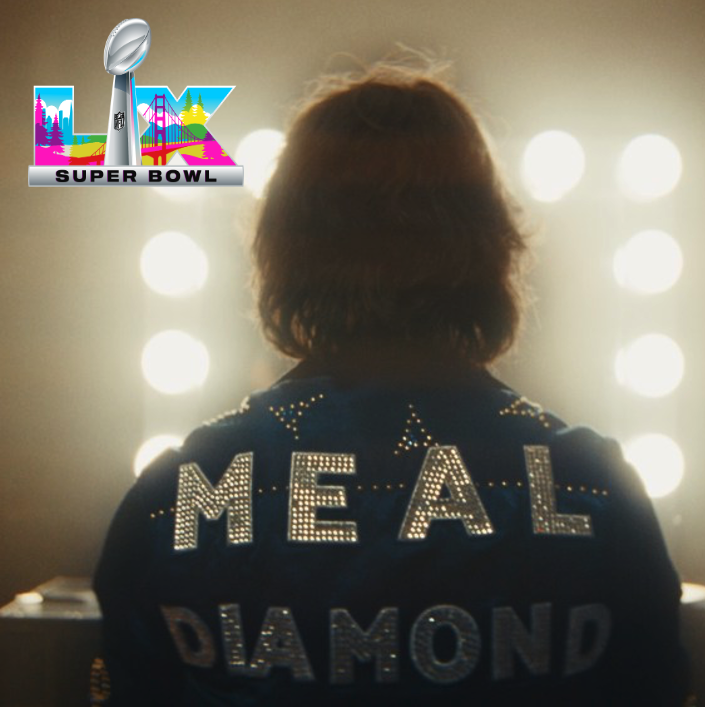
HELLMANN’S “MEAL DIAMOND”: In perhaps the most delightfully absurd spot of the evening, Andy Samberg transformed into “Meal Diamond,” belting out a Sweet Caroline-inspired ode to sandwiches and condiments alongside Elle Fanning in a quirky deli setting. The musical parody hit the perfect note of humor and memorability that Super Bowl audiences crave.
RING TECHNOLOGY MEETS HEART: Ring’s first Super Bowl ad showcased its new “Search Party for Dogs” feature, using AI and neighbors’ camera networks to reunite lost dogs with their families. The heartfelt 30-second spot demonstrated how technology can serve genuine human needs. Ring backed up the message with action, donating $1 million worth of cameras to approximately 4,000 U.S. animal shelters to help reconnect lost pets with their families.
MANSCAPED EMBRACES THE BIZARRE: One of the year’s most memorably strange ads featured wads of body hair snagged in drains that suddenly sprouted bright blue eyes and stared back at viewers. The brief clip leaned fully into Manscaped’s irreverent humor while introducing its new “Mancare Your Everywhere” platform.
A New Wave of Personal Empowerment and Self-Care Messaging
Several advertisers departed from typical Super Bowl feel-good fare to tackle weightier topics:
Hims & Hers continued its contrarian approach with “Rich People Live Longer,” narrated by rapper Common. The minute-long spot dramatized healthcare inequality, showing how the ultra-wealthy access extensive treatments while everyday Americans are left behind. This marked the company’s second consecutive Super Bowl appearance after last year’s controversial “Sick of the System” ad.
Ro featured tennis legend Serena Williams anchoring the company’s first Super Bowl commercial, using her own health journey to destigmatize GLP-1 medications for weight and metabolic health.
Novartis did a very nice job of blending empowerment with humor, with a prostate cancer awareness spot titled “Relax Your Tight End,” featuring NFL legends like Rob Gronkowski, Tony Gonzalez and Bruce Arians. The campaign urges men to overcome screening anxiety by showing early detection can start with a simple blood test rather than an invasive exam.
Dove went back to the well, nicely and powerfully focusing on girls’ empowerment, while Mike Tyson appeared in a surprisingly strong spot for RealFood.gov. And each brought different angles to messaging that extended beyond pure product promotion.
The Ad That Didn’t Air: Skittles’ Alternative Reality
In perhaps the most innovative—or bizarre—marketing stunt of Super Bowl LX, Skittles chose not to run a traditional television commercial at all. Instead, the brand performed a live, in-person “commercial” at the front door of a single contest winner, featuring Elijah Wood dressed as a woodland creature.
While a 15-second promotional spot ran on YouTube, connected TV, and social channels showing teens using a magical horn to summon Wood’s creature character who delivers Skittles, the main event—the actual performance at the winner’s home—happened during one of the commercial breaks during the game itself. This meta-approach to Super Bowl advertising raised questions about the future of the format: if a brand pays millions for a Super Bowl slot, does it have to actually air on television?
The AI Advertising Paradox
Despite the presence of multiple AI companies advertising during the game, underlying research reveals a troubling disconnect between industry enthusiasm and consumer sentiment. A staggering 82% of advertising executives believe Gen Z and Millennial consumers feel positive about AI-generated ads, but only 45% of those consumers actually do—a perception gap that has widened from 32 points in 2024 to 37 points in 2026.
The emotional disconnect is measurable: AI-generated creative was consistently assessed as more “annoying,” “boring,” and “confusing” than traditionally produced ads. Brain imaging research found that even high-quality AI-generated advertisements elicited weaker memory activation compared to traditional ads, suggesting they’re less memorable and impactful.
While 52% of industry executives described brands using AI-generated ads as “creative,” only 38% of Gen Z and Millennial respondents shared that perception. Young consumers were more likely to view these brands as “inauthentic” or “unethical.”
High-profile backlash has already materialized: Coca-Cola’s AI-generated holiday ads faced immediate criticism from both casual viewers and artists, while McDonald’s Netherlands had to pull their AI Christmas ad after viewers called it “AI slop” that “ruined Christmas spirits.”
That said, 73% of Gen Z and Millennials indicated that knowing an ad was AI-created would either increase their likelihood to purchase or make no difference—suggesting the impact isn’t entirely negative, especially when AI use is transparently disclosed.
The Bigger Picture: What Super Bowl LX Reveals
Super Bowl LX demonstrated several key trends shaping the advertising landscape:
Scarcity Creates Value: In an era of infinite content and fractured audiences, the Super Bowl’s massive, simultaneous viewership remains irreplaceable. No other event can guarantee brands that 130+ million pairs of eyes will see their message at the same moment.
Production Values Matter: The investment in top directors, celebrities, and cinematic production reflects an understanding that Super Bowl ads need to be mini-movies, not just commercials.
Authenticity vs. Technology: The tension between AI capabilities and consumer desire for authentic, human-created content will likely define advertising debates for years to come.
Social Commentary Has Arrived: Advertisers are increasingly willing to tackle serious topics like healthcare inequality, challenging the notion that Super Bowl ads must be purely escapist entertainment.
Nostalgia Never Dies: Reuniting beloved casts and referencing cultural touchstones continues to resonate, providing emotional shortcuts to audience engagement.
As the advertising world awaits official viewership numbers and post-game analytics on which ads drove the most brand lift, one thing remains clear: Super Bowl advertising has evolved from simple product promotion into a cultural conversation unto itself—one that commands $8 million per 30 seconds and shows no signs of losing its power.
The question now is whether this model can sustain itself as viewer habits continue to evolve and younger audiences increasingly seek authentic, human connections in a world of AI-generated everything. For now, at least, the Super Bowl remains the one appointment television that everyone still keeps.