

It’s been well-documented that consumers are tuning out news due to the anxiety caused by the constant negativity of the news cycle. Indeed, many have turned away from paying attention to the news cycle. But it’s not all politics and wars—and there’s some recent news that, if you are a brand using social media to reach audiences—may be very, very important to you.
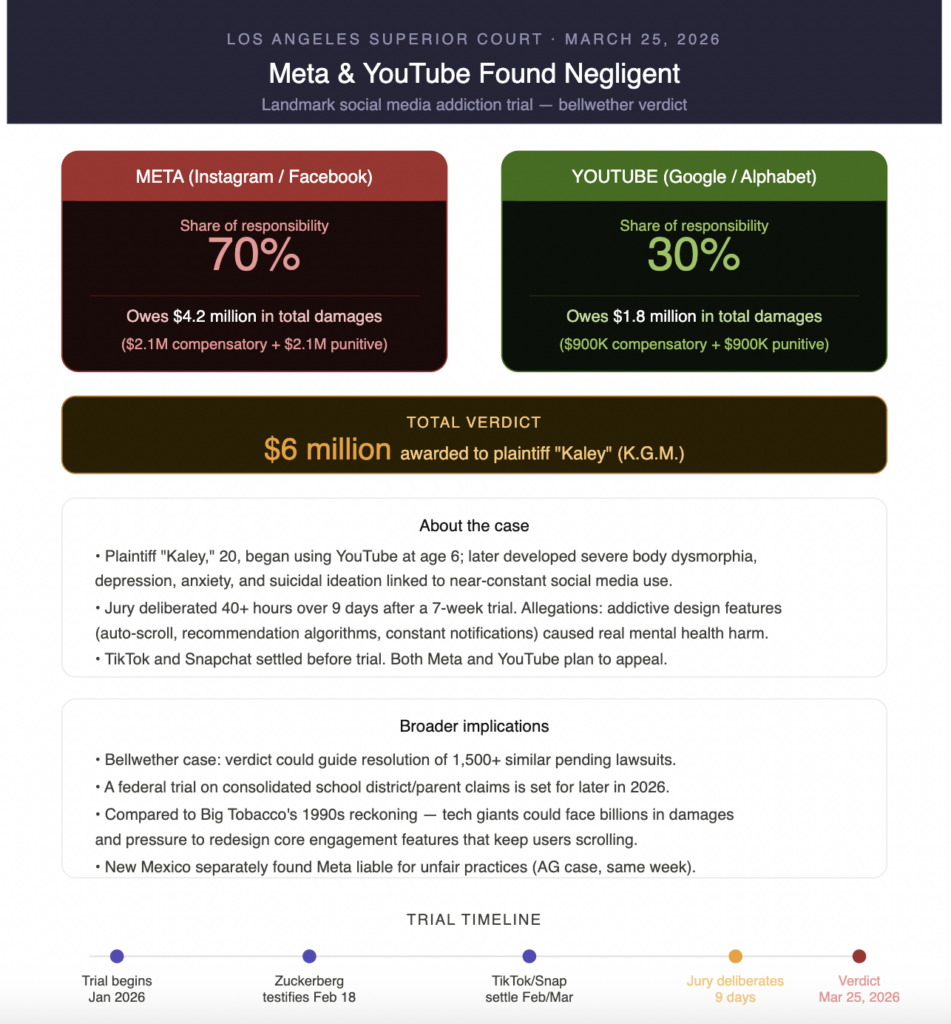
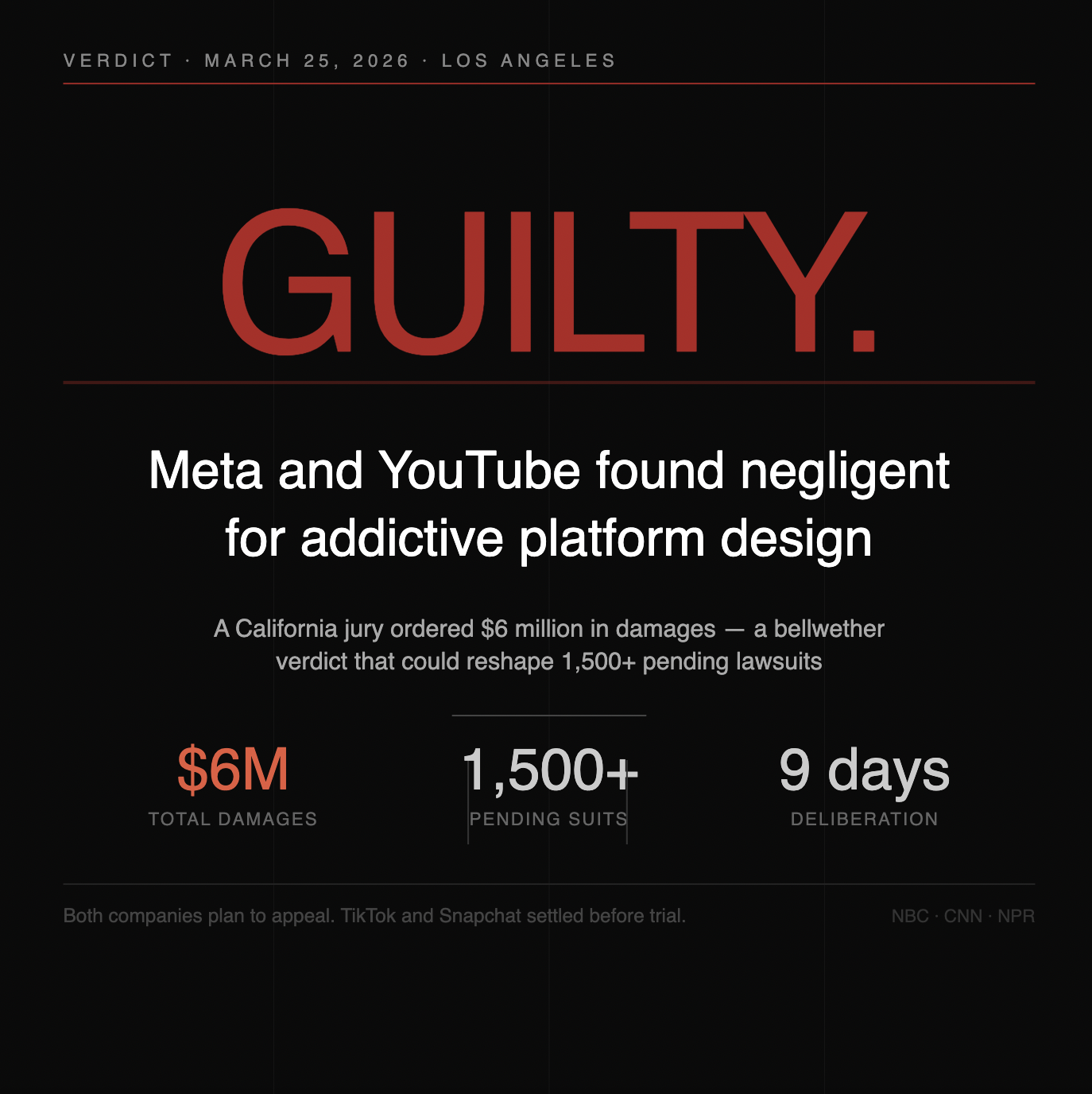
A California jury found Meta and YouTube negligent for designing apps that harmed kids and teens and failed to warn them about the dangers, awarding $6 million in total damages to a 20-year-old plaintiff who alleged the platforms’ addictive design features led to anxiety, depression, and body image issues. Some are calling it social media’s “big tobacco” moment. Jurors found that the companies were aware their platforms could have adverse effects on minors but failed to adequately warn users, and determined the companies acted with “malice, oppression or fraud.” Both Meta and YouTube will appeal.
Critically, this trial is a bellwether test case tied to roughly 2,000 other pending lawsuits brought by parents and school districts arguing that social media giants should be considered manufacturers of defective products. And this came on the heels of a separate blow: A $375 million penalty levied against Meta by a New Mexico jury alleging Meta violated state protection laws by knowingly harming children’s mental health and concealing information about child sexual exploitation on its platforms.
What This Means for Brands
This is genuinely significant for how brands use social media, even though brands aren’t defendants here. Here’s why:
- The platforms will be forced to change their products: The liability pressure from 2,000+ pending lawsuits will push Meta and YouTube to redesign the very algorithmic features, including auto-scroll, engagement loops, recommendation engines. These are of course, features that brands have benefited from for years. Reach, virality, and time-on-platform for younger audiences may all contract as the platforms try to reduce legal exposure.
- Youth-targeted marketing faces new scrutiny: The verdict puts legal weight behind the concept of tech addiction that Big Tech has spent years trying to dismiss. That framing— platforms as “defective products” akin to tobacco—creates a cultural and regulatory climate where brands advertising to teens and children on these platforms could face reputational risk, or eventually legal exposure of their own for contributing to harmful engagement.
- Section 230 protections may erode: This case was partly won by framing the platforms as product designers rather than publishers. If that legal logic holds through appeals, it signals a shift in the liability landscape that could eventually touch ad partners and brands as well.
- The audience-building model may shift: Brands that have built audiences almost entirely on Meta and YouTube’s algorithmic distribution are essentially building on rented land that may soon be remodeled under legal pressure. This is a strong argument for investing more in owned channels such as email lists, newsletters, podcasts, direct communities—rather than relying on engagement-maximizing platform features that are now in legal crosshairs.
- Influencer marketing tied to youth audiences is especially exposed: The New Mexico and LA rulings together signal that regulators and juries are increasingly hostile toward practices that appear to target minors with addictive content. Brands using influencer marketing aimed at under-18 audiences—particularly in categories like beauty, fashion, gaming, or food—should expect both tighter platform enforcement and increased scrutiny from the FTC and state AGs.
The Bottom Line
The immediate financial damage to Meta and Google is modest—just $6 million is a rounding error for these companies. But legal experts note the verdict may influence the outcome of additional 2,000 pending lawsuits, NPR and the plaintiff’s attorney called it “bigger than one case.”
The strategic signal for brands is clear: The era of frictionless, engagement-optimized social media as a primary growth channel is under serious long-term pressure. Smart brands will start hedging now and diversify channels, audit youth-facing campaigns, and think carefully about what it means to build an audience on a platform that may soon look quite different.