

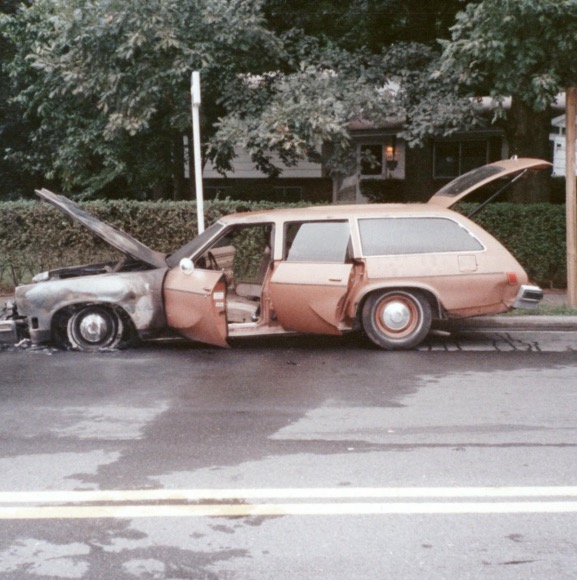

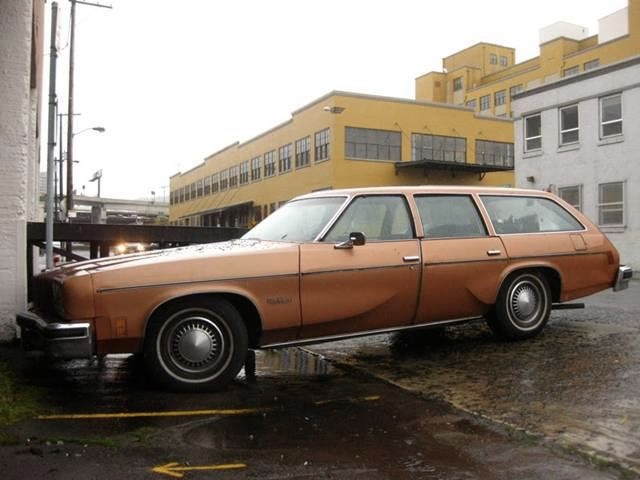
I grew up with a station wagon. Actually, I grew up in a station-wagon family. My first station wagon – which eventually became mine to drive when I was 16 – was a 1977 bright-orange Oldsmobile Vista Cruiser.
It was spectacularly uncool, which, as it turns out, was not the fault of the station wagon. The Vista Cruiser finally caught on fire and died an inglorious death when I was 18, but that’s another story for another day.
For a while, station wagons were the family vehicle. They were practical. They swallowed kids, groceries, luggage, dogs, sports equipment and whatever else a family could cram into them.
Deep down inside, we knew we looked ridiculous. Remember Eugene Levy in 1983’s National Lampoon’s Vacation, playing the car salesman who talks Clark Griswold into the Wagon Queen Family Truckster:
“You think you hate it now, but wait till you drive it.”
He wasn’t wrong. And somewhere along the way, station wagons finally became viscerally uncool.
So we moved on, giving way to, yes, the minivan.
For a while, minivans were the answer to everything. More room. Sliding doors. Better visibility. Cupholders seemingly everywhere. When my kids were small, they were GOLD!
But I wouldn’t drive it if I could avoid it. I made my wife drive ours. And she hated it.
And then minivans became uncool, too. So we moved on again, and the SUV became the family vehicle of choice.
Rugged. Adventurous. Capable. Not uncool in any way. Never mind that most of them spent their lives driving children to soccer practice and commuting to the office. But eventually even the SUV needed a makeover.
Enter the crossover.
And here’s where things get interesting. Because a crossover is, in many respects, a station wagon. No, check that. It just is a station wagon, plain and simple, all-wheel drive be damned. Sure, they might be just a little taller, a little more aggressively styled, maybe some plastic cladding, a more upright driving position, and the lipstick comes in the form of a few words like “utility,” “adventure” and “active lifestyle” sprinkled liberally throughout the marketing.
But fundamentally? It’s a car with a big back end. A station wagon.
In other words, the auto industry has spent decades convincing us that station wagons are cool again by simply building station wagons and refusing to call them station wagons.
And I think there’s a lesson here that goes well beyond automobiles.
Consumers don’t always reject the product. Sometimes they reject the story.
This is an important — essential, really — distinction for marketers.
When a product, service or category starts to lose relevance, the instinct is often to change the thing itself: New features. New packaging. New technology. New product names.
Sometimes that’s exactly what is required.
But sometimes the product isn’t the problem. The problem is what people think the product says about them.
Nobody wanted to be seen driving the family station wagon anymore because the station wagon had acquired a meaning: Suburban, practical, boring, old-fashioned. So the industry changed the meaning. It didn’t necessarily change the fundamental utility. It changed the identity. Suddenly, the same basic proposition wasn’t about hauling your kids around town. Today, it’s about adventure. It’s no longer about practicality. It’s about lifestyle.
It’s not a station wagon. It’s a crossover. And apparently, that was all we needed.
This. Happens. Everywhere.
A product becomes associated with a particular generation, socioeconomic group, era or stereotype. Consumers move on, not necessarily because the product stopped working, but because they no longer want to be associated with what it represents.
That’s a branding problem. And branding problems don’t always require new products. Instead, they require new context.
Think about what happened here: The auto industry didn’t tell consumers, “Hey, remember those station wagons you stopped liking? We’ve decided you were wrong.” It didn’t create a fundamentally new product. It created a new category. It gave consumers permission to like the thing again without forcing them to admit they liked the thing they had rejected.
That’s clever marketing. And it raises an interesting question for anyone responsible for a brand: What have your customers actually rejected? The product? Or the identity that comes with buying it?
Those are two very different problems.
You can see the same trick playing out right now with artificial intelligence. We’ve used AI and machine learning in marketing for years. Years! But suddenly it’s in every commercial, every pitch deck, every LinkedIn post, because “AI” finally became the word that made the same underlying technology feel new again.
When a 60-year-old bank president told me he just needed to “Chat GPT it,” I knew we’d reached critical mass. It’s the same way we all learned to say we’d “FedEx it” 30 years ago, long after overnight shipping had stopped being anyone’s differentiator.
If audiences reject the product, you need to innovate. If they reject the identity, you may need to reposition. And if they’ve simply gotten bored, you may need to give them a new reason to care.
The distinction matters because companies sometimes spend millions fixing things that aren’t actually broken. Meanwhile, the thing that needs fixing is the story. That’s the funny thing about branding. Sometimes the job isn’t to make something better. It’s to make people feel differently about something that was already good enough.
Which brings me back to that orange, 1977 Oldsmobile that caught on fire. At the time, I didn’t know I was sitting inside a marketing lesson. I just knew I was sitting inside a very large, very orange station wagon.
Today, I look around at all the sleek, sophisticated “crossovers” on the road and can’t help but smile. Because apparently, the station wagon won. It just had to change its name first.