


*UPDATE to this story on the bottom
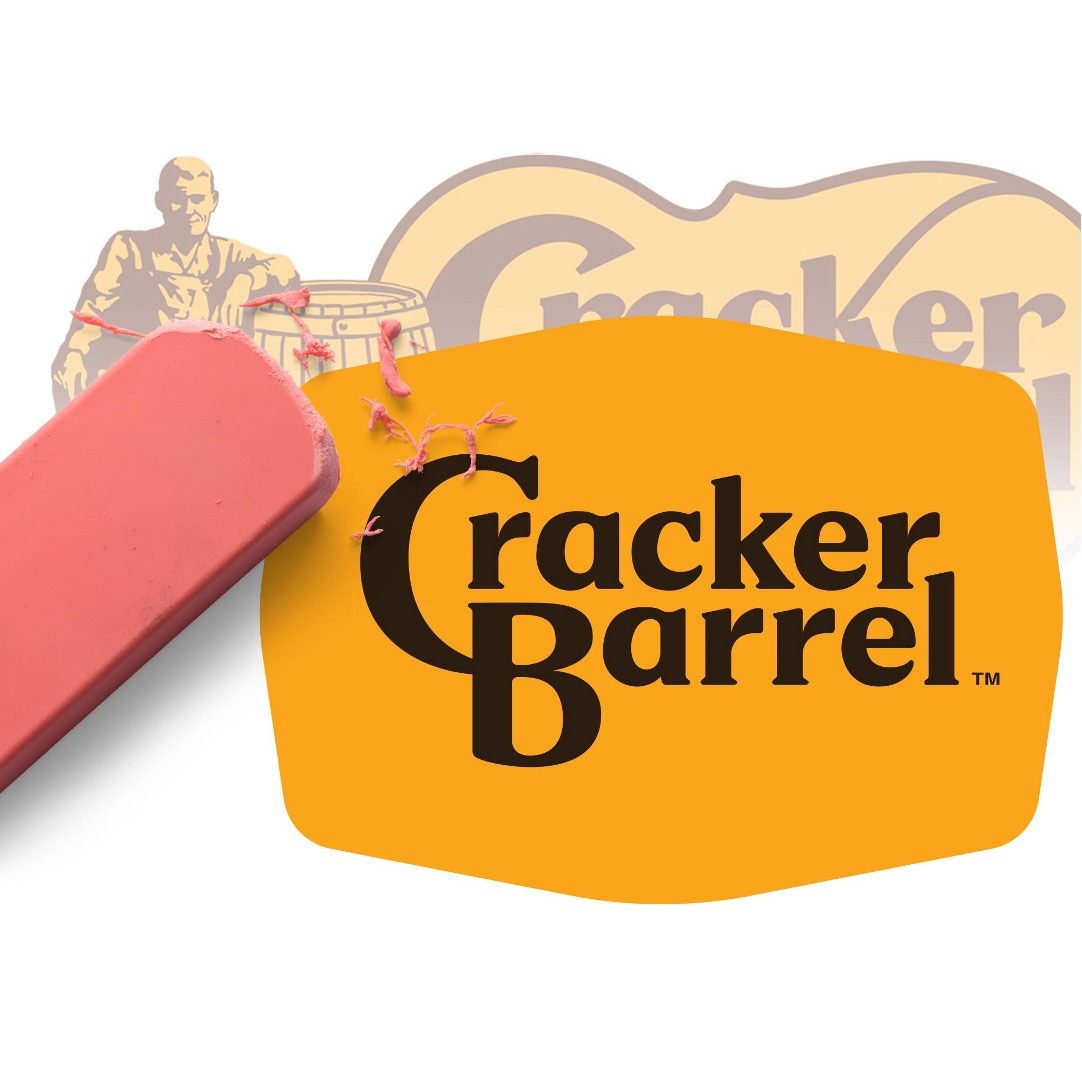
About a week ago, Cracker Barrel kind of broke the internet when the 55-year-old restaurant and retail store chain served up a redesign of its iconic logo. Gone are images of good old “Uncle Herschel,”—a farmer in overalls who was actually added eight years after the original brand was created—as well as the cracker barrel itself.
It’s all apparently part of a broader set of changes being driven by Cracker Barrel’s relatively new CEO, Julie Felss Masino, impacting the chain’s menu and restaurant decor in a campaign called “All the More.” But instead of bringing delight to customers and brand fans, the changes have sparked an online backlash not seen since Jaguar did the same thing with similar results.

The most irrelevant critiques, in my mind, have come from conservative groups which are accusing the company of falling prey to the woke crowd with the rebrand. As Billy Binion wrote in Reason.com, “The criticism, from a slew of politicians and public figures, coalesced around a core theme: that the restaurant had fallen prey to the wokeness bug and would soon become another one of its casualties. Go woke, go broke, as the saying goes.”
There are, in fact, many decisions made in this world by businesses due to political correctness. But I’m fairly certain this is not one of them. The logo simply looks like it was made circa 1947—that’s it— so let’s set that aside and just move on.

There is, however, a fascinating case study here, and it’s important to understand the underlying nuances.
First, it’s important to understand that one of the strongest psychological forces on the planet is people’s resistance to change. Whether it’s fear of the unknown, fear of failure, a lack of faith in change-makers or what have you. Thus, in frequenting Cracker Barrel, customers are not doing so due to a pristine Michelin star rating. Instead, it’s because consumers historically have known what to expect when they see that road sign along the interstate. The folksy brand has always represented somewhat of a comfort blanket, and they want it just the way they always have: The southern fried chicken, the pecan log, the pancakes, the kitschy furnishings—all of it.

Then you have marketers, arguably one of the loudest collective sets of voices on the internet, as we are typically competing for share of voice and mind. And nothing unites marketers (along with bored people on social media) quite like a rebrand. For whatever reasons, there is an inherent need to hate for the sake of hating something that is new and different. In fact, quite a few marketers built their name on bashing Jaguar’s rebrand.
Finally, there is AI, although I do not believe AI played a role in this rebrand. However, artificial intelligence is seemingly seared in the backs of our collective minds these days. And in the era of AI, humanizing a brand has become more important than ever.
AI, tech-bro culture, the rampant private equity interest in historic restaurant brands (and subsequent reorganization of operations and branding updates) as well as other factors have created a growing pushback against the streamlined, almost tech-focused brands that have become the standard since 2015 or so. But what novices fail to grasp is that how your brand appears on a smart-phone screen is an important concern—along with accessibility and legibility (both of which are important aspects of brand design). Regardless, consumers are showing fatigue toward what can be seen as these simplified, sterile styles, which makes Cracker Barrel seem like it sold out after serving as a beacon of nostalgia since its founding.
Thus, the new look becomes an easy target for just about everyone.

Here’s what’s most interesting about all of this, at least to me: The majority of people who are bashing this rebrand probably haven’t eaten in a Cracker Barrel in over a decade, and may very well never visit. Still, don’t be surprised if all this bashing drives enough curiosity that, in turn, causes a significant number of new customers to visit.
Masino has said as much, in fact, telling Good Morning America, “People like what we’re doing. Cracker Barrel needs to feel like the Cracker Barrel for today and for tomorrow—the things that you love are still there. We need people to choose us, and we want people to choose us.”
Will it? It’s certainly possible. And if that happens—and if the Southern Fried Chicken, Oldtimer’s Breakfast or Momma’s Pancake Breakfast hold true—Masino and Cracker Barrel will be just fine.
Here’s audio of an interview I did on KMOX-1120 in St. Louis about the topic if you’d like to hear more.
*UPDATE
In the evening of Tuesday, Aug. 26, Cracker Barrel announced it had abandoned plans to adopt a new logo following fierce backlash.
“We thank our guests for sharing your voices and love for Cracker Barrel,” the company said in a social media post. “We said we would listen, and we have. Our new logo is going away and our ‘Old Timer’ will remain.”
President Donald Trump, who was among those slamming the rebrand, applauded the reversal, saying: “Congratulations ‘Cracker Barrel’ on changing your logo back to what it was. All of your fans very much appreciate it.”