



The other day, I was putting up a new video post on Instagram for my band, Atomic Junction, and wondering if I should include some commonly used hashtags like #NewMusic, #AltCountry, #StupidHashtag and more. And it dawned on me: Do I really need to be spending time doing this?
A reasonable question, right? And if you’re still cramming 30 hashtags into every post and wondering why it’s not moving the needle, well, you might want to read this.
Hashtags aren’t dead, but the way they work has changed dramatically. They’ve gone from being a reach multiplier to functioning more like metadata. Hashtags help platforms categorize your content rather than actively broadcasting it to new audiences. Think of them less as a megaphone and more as a filing system. A useful one, but not the engine of growth it used to be.
The reason? Social algorithms have gotten genuinely smart. Platforms like Instagram and TikTok can now read the text in your images, parse your captions, and analyze what’s happening in your videos, all without a single hashtag. So while tags still help reinforce what your content is about, they’re no longer doing the heavy lifting they once were.
Instagram even made it official: As of December 2025, you’re capped at five hashtags per post. Not a recommendation, but a hard limit. The platform’s own head, Adam Mosseri, has been pretty blunt that hashtags don’t drive reach the way they once did. What matters now is content quality, watch time, saves, and shares. The accounts seeing the best results are treating hashtags as precise classification tools, not a spray-and-pray reach tactic.
Of course, you’ll still find mildly varying perspectives.
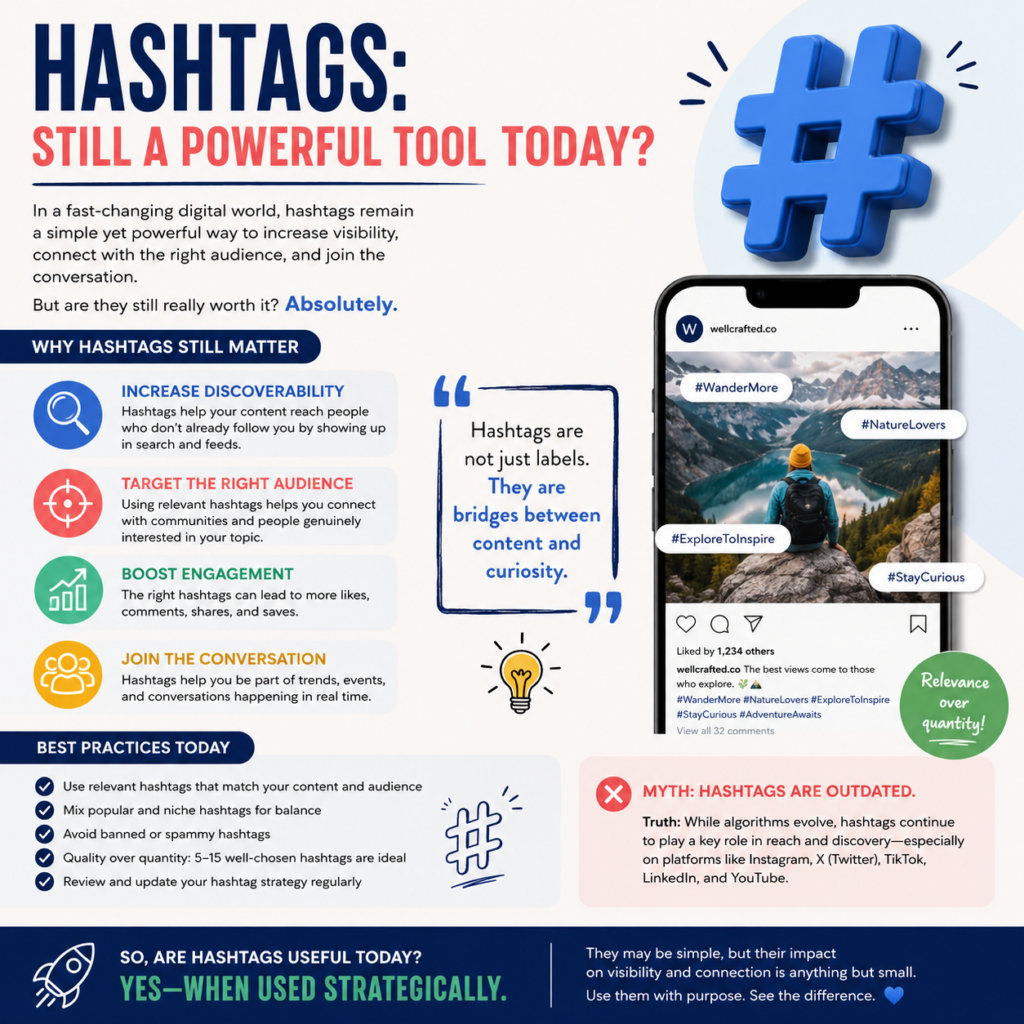
Here’s the quick platform breakdown:
- Instagram: 3–5 specific, relevant hashtags. That’s it.
- TikTok: 2–5 tags, but the algorithm cares far more about whether people watch your video to the end and share it.
- X/Twitter: 1–2 hashtags gets a meaningful engagement boost. Three or more and engagement actually drops — they start to look like spam.
- LinkedIn: 1–3 industry-specific tags work well, especially in niche communities.
- Facebook: Don’t bother — hashtags barely move the needle there, where social signals like comments and shares do all the work.
So what should you focus on instead? Treat hashtags the way you’d treat SEO keywords. Choose them deliberately based on what your audience is actually searching for. Then put the bulk of your energy into captions that are clear, keyword-rich, and worth reading. On video platforms, prioritize strong hooks and on-screen text, since algorithms actively scan that too.
The spray-and-pray playbook is officially retired. In 2026, a handful of the right hashtags will always outperform a wall of generic ones. Precision beats volume every time.
#FollowMyBand