


Understatement of the Decade: AI may have a community problem.
You see, America is very good at announcing revolutions but much less proficient at explaining what they look like when they arrive in someone’s backyard.
For the past several years, the national conversation about artificial intelligence has been almost entirely aspirational. AI will transform medicine. It will reshape education. It will make American companies more productive. It will create enormous economic value. It may fundamentally change how we work.
All of that may be true, but eventually, every AI revolution becomes a zoning hearing.
I’ve seen this movie before. I’ve spent much of my career working with utilities on similar siting issues that were nearly as explosive.
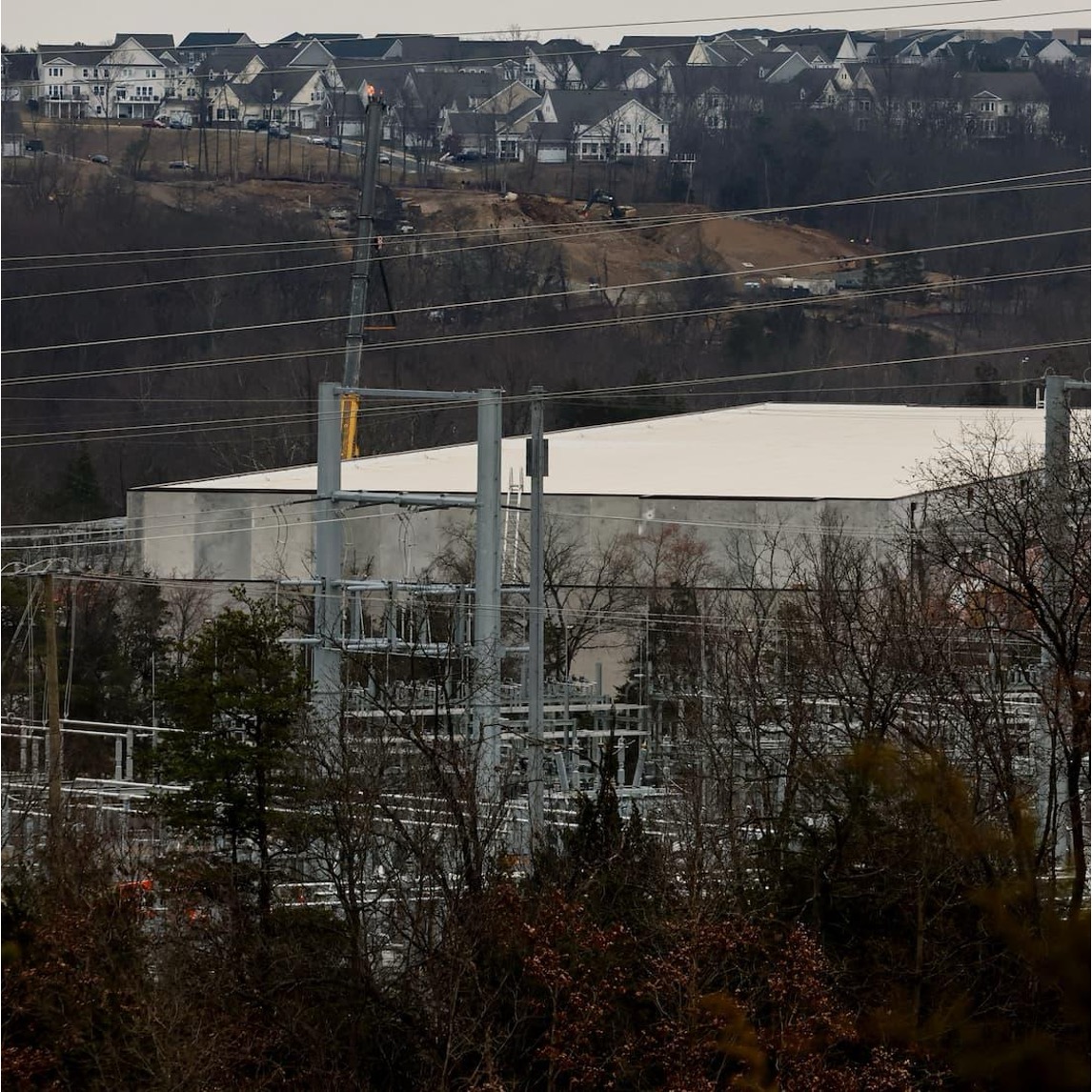
What’s happening, again, is that the AI revolution is being reduced to a parcel of land outside—or sometimes in the middle of—a town. Just like a substation, a transmission line, a water agreement, a new road, a construction workforce, a tax incentive or a planning commission meeting where residents have three minutes at a microphone to ask whether the thing everyone in Washington says is going to change the world is going to change their world.
That is where the AI conversation gets interesting because America’s biggest challenge may not be building enough compute. Instead, it may be building enough consent.
The Distance Between National Excitement and Local Reality
There is a strange and total disconnect in the way America talks about AI. At the national level, AI is treated as an existential economic competition. The United States needs more computing capacity. More semiconductor manufacturing. More electricity. More transmission. More data centers. More investment.
At the local level, the conversation sounds very different. How much water will it use? Will my electric bill go up? How loud will it be? What will it look like? How many permanent jobs will it create? Why does it need to be here? What happens to my property value? Will the company actually pay the taxes it promised?
These are not anti-technology questions. They are citizenship questions. And pretending otherwise is one of the biggest mistakes the industry is making every day, or so it seems.
The person standing at a county commission meeting asking about water consumption isn’t necessarily opposed to artificial intelligence. They may simply be asking the most reasonable question in the world: What does this mean for me?
The industry needs to get much better at answering it.
Infrastructure Has Never Been Built on Engineering Alone
America’s great infrastructure projects were never simply engineering exercises. Railroads required landowners to accept tracks through their communities. Highways required governments to acquire enormous amounts of property. Power plants, pipelines, airports and transmission lines all required communities to accept disruption in exchange for a larger promise.
The technical case was never enough. Neither is it today.
A data center can be perfectly engineered and still be poorly understood. A utility can demonstrate that sufficient generation exists and still fail to explain what the project means for local customers. A developer can produce an economic-impact study showing billions of dollars of investment and still lose the room if residents believe they are being talked at rather than talked with.
This is not a communications problem in the traditional sense. It is a trust architecture problem.
The Trust Deficit Is Becoming an Infrastructure Constraint
We tend to think of infrastructure constraints as physical things: Not enough generation. Not enough transmission. Not enough water. Not enough fiber. Not enough transformers.
Increasingly, there is another constraint: Not enough trust.
I’ve spent much of my career working to build trust, and I can assure you: trust has physical consequences. A community that doesn’t trust a developer can delay a project. A county that doesn’t trust its utility can resist new infrastructure. A state that doesn’t trust its economic-development partners can impose additional conditions. A resident who believes the economic benefits are exaggerated will assume the environmental costs are being minimized, too.
Let’s not forget: Every delay has a cost. Every controversy consumes political capital. Every poorly handled community meeting makes the next community meeting harder.
This is why community engagement should not be treated as the final stage of an infrastructure project—the part that happens after the engineers have finished designing it and the lawyers have finished negotiating it.
It belongs near the beginning.
The New Infrastructure Playbook
The companies and communities that successfully navigate this buildout will approach engagement differently.
1. Show up before the project is inevitable. Communities should not first hear about a major infrastructure investment when a rendering appears on a planning commission agenda.
2. Explain the system, not just the project. A resident who understands why a data center needs power, why that power requires transmission, why transmission takes time and why the economic benefits extend beyond the property line is better equipped to have a meaningful conversation about the tradeoffs.
3. Answer the uncomfortable questions first. Water. Power prices. Noise. Land use. Tax incentives. Environmental impacts. Permanent employment. Construction impacts. Don’t bury the hard questions underneath a presentation about innovation. Lead with them.
4. Give communities something in return for hosting infrastructure. That does not necessarily mean giveaways. It might mean workforce development. Road improvements. Grid investment. Educational partnerships. Water infrastructure. Emergency services. Broadband. Tax revenue that is transparently connected to community priorities. The principle is simple: If a community is being asked to host infrastructure that serves a national or global economy, residents should be able to see the local value clearly.
5. Stop measuring engagement by attendance. A packed town hall isn’t success. A hundred people signing a petition isn’t failure. The real question is whether people leave the process understanding what is being proposed, what the tradeoffs are, what they are being asked to accept, and what they can reasonably expect in return. That is a much higher bar. It is also the bar that matters.
The New Infrastructure Social Contract
There is a larger idea underneath all of this. America has historically operated on an implicit infrastructure bargain: We build things that create broad economic value, and communities accept some local disruption because they believe the benefits are real and the process is fair.
That bargain is under stress.
People are more skeptical of institutions. Information is more fragmented. Communities have more ways to organize opposition. Infrastructure projects are increasingly large, visible and consequential.
At the same time, America needs to build more than it has built in decades. And that combination creates a paradox. We need to move faster. But moving faster without building trust can actually make us slower.
The answer isn’t to let every community veto every project. Nor is it to dismiss legitimate concerns as NIMBYism. The answer is to build a better social contract around infrastructure. One in which communities understand why something is being built. One in which developers are honest about tradeoffs. One in which utilities explain the system rather than simply defending the rate case. One in which economic-development officials can articulate both the opportunity and the cost. And one in which residents are treated not as obstacles to be managed, but as stakeholders in the outcome.
The AI Infrastructure Test
There is a simple test for whether America is getting this right. Walk into any community where a major AI infrastructure project is being proposed and ask five questions:
1. Why here?
2. Why now?
3. What does the community gain?
4. What does the community give up?
5. And who is accountable if the promises don’t materialize?
If the people proposing the project can answer all five clearly, honestly and without a PowerPoint full of euphemisms, they are probably on the right track.
If they can’t, no amount of national enthusiasm about artificial intelligence is going to make the project easier to build.
AI may be the technology story of this generation. But the infrastructure required to power it is becoming one of the great community stories, too.
The winners won’t simply be the companies that can build the fastest. They will be the companies, utilities, governments and communities that figure out how to build together.
America doesn’t need less ambition. It needs a better conversation about what that ambition looks like on the ground. Because the future of AI isn’t being decided only in corporate boardrooms or Washington policy meetings.
Increasingly, it is being decided in county commission chambers, city councils and town halls. And the question isn’t whether America will build. The question is whether it can learn to build with people, rather than around them.