

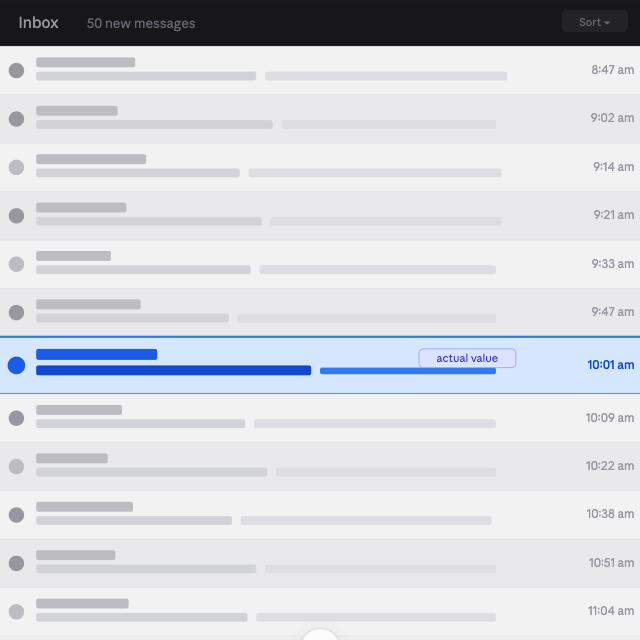

My email inbox is a graveyard of good intentions.
Each morning I open my email to find some variation of the same message: “Quick reminder — you only pay for qualified meetings that show. No retainer, no setup fee. All results you keep are yours. Worth a quick chat?”
Sometimes it’s dressed up with a first name and a company I’ve never heard of. Sometimes it’s the fourth installation, “just bumping this to the top of your inbox” in a week. The sender clearly believes in their product. The copy is technically competent. And yet — delete, delete, delete; spam, spam, spam.
Here’s the uncomfortable truth for anyone doing outbound email marketing: Your prospects are doing the exact same thing to you. Hell, I’m doing this right now; using a platform called Instantly.ai, and the results have been embarrassingly dreadful.
So what actually works? As someone who lives on both sides of this equation, sending campaigns and drowning in pitches — here’s what I’ve learned about email that earns attention rather than demanding it.
The Problem With “Quick Chat” Culture
The example above is a masterclass in what not to do, and it’s worth dissecting why.
It leads with the vendor’s business model, not the buyer’s problem. “You only pay for qualified meetings” is a risk-reduction argument. However, it assumes I already want what they’re selling. If I don’t have a felt need for more meetings, the pricing structure is irrelevant.
It’s engineered to sound low-stakes, which makes it feel high-pressure. Phrases like “worth a quick chat?” and “no setup fee” are designed to minimize friction, but sophisticated buyers recognize the pattern immediately. It reads as a script, not a conversation.
It provides zero evidence of relevance. Why me? Why now? What do they know about my business that makes them believe I need this? The absence of those answers signals a spray-and-pray list, not a thoughtful outreach.
The irony is that this approach, multiplied across thousands of senders, has made the entire channel harder for everyone, including the people doing it right.
6 Principles That May Cut Through
1. Earn the right to be specific
The single biggest differentiator in outbound email is specificity. Not fake specificity (“I noticed you’re in the marketing space!”). But what about real specificity that signals you’ve done the work?
Reference something concrete: A piece of content they published, a funding announcement, a job posting that hints at a strategic priority, a market shift that affects their category. When a reader thinks how did they know that?, you’ve already won half the battle.
This doesn’t scale endlessly, which is exactly the point. Fewer, better emails outperform high-volume blasts almost every time for B2B outreach.
2. Lead with a point of view, not a product pitch
The emails I actually read, and occasionally respond to, usually open with an observation or a claim, not an offer. Something like: “Most [role] teams we talk to are measuring email success by open rate. We think that’s the wrong metric, and here’s why.”
That’s a point of view. It’s interesting. It invites a response, even if that response is disagreement. A pitch asks for time. A perspective starts a conversation.
3. Make the subject line do real work
The subject line is the entire game. If it doesn’t earn the open, nothing else matters. And yet most outbound subject lines are either deceptively vague (“Quick question”) or transparently salesy (“Increase your pipeline by 40%”).
The best subject lines are specific enough to be intriguing and honest enough to build trust. They hint at value without over-promising. Think: “Why [Company]’s outbound strategy might be leaving revenue on the table.” But not, “We help companies like yours grow faster.”
Curiosity and relevance beat cleverness every time.
4. Respect the reader’s intelligence
“No retainer, no setup fee, all results you keep are yours.” The desperation embedded in that sentence is visible from space. Buyers know that no vendor gives away value for free. When copy bends over backwards to eliminate every possible objection upfront, it paradoxically creates new ones.
Write to your reader as a peer, not a skeptic to be overcome. Assume they’re smart. Assume they’re busy. Assume they’ve seen a hundred pitches like yours. What would make this one worth their two minutes?
5. Follow up like a human, not a sequence
The automated follow-up sequence: Bump one, bump two, “just wanted to make sure this didn’t get buried.” Ugh. It’s now so ubiquitous that it’s become white noise. If your only move is to resurface the original message, you’re not adding value, you’re adding friction.
Each touchpoint should offer something new: a different angle, a relevant case study, a question worth considering. If you’ve followed up three times with nothing new to say, the honest answer is to stop — and come back when you have something worth saying.
6. Perhaps go meet another human being
Covid is over. The conference circuit is back. Dinners happen again. And yet a remarkable number of sales and marketing teams are still treating email as if it’s the only channel that exists. The dirty secret of great email marketing is that it works best as a follow-up to a real human interaction — not a substitute for one. Meet someone at an event, have a genuine conversation, and suddenly your email isn’t cold outreach. It’s a continuation. That’s an unfair advantage most of your competitors have voluntarily given up.
The Longer Game
Here’s the thing about email marketing that the “quick chat” crowd misses: The channel’s real power isn’t in the individual send. It’s in the relationship built over time.
The marketers and salespeople I actually buy from and refer others to are the ones who showed up consistently with ideas that made me better at my job, long before they asked for anything. It’s a newsletter I actually learned from, an invite to a roundtable where I met useful people, a resource that solved a problem I was dealing with that week, a human being who actually wanted to catch up and talk about challenges without an immediate return, aka, #6 above.
That’s not an overnight strategy. But in an inbox full of vendors screaming for five minutes of my time, the person who’s already given me value without asking is the one whose name I recognize — and whose email I open.
The channel isn’t broken. The approach is. Fix the approach, and email marketing becomes one of the most powerful direct channels available.
Your prospects aren’t ignoring you because email doesn’t work. They’re ignoring you because you sound like everyone else.
Stop doing that.